Perspective · · 7 min read
The State of Generative Engine Optimization in 2026: Why Getting Cited Is Only Half the Job
By Itamar Weisbrod
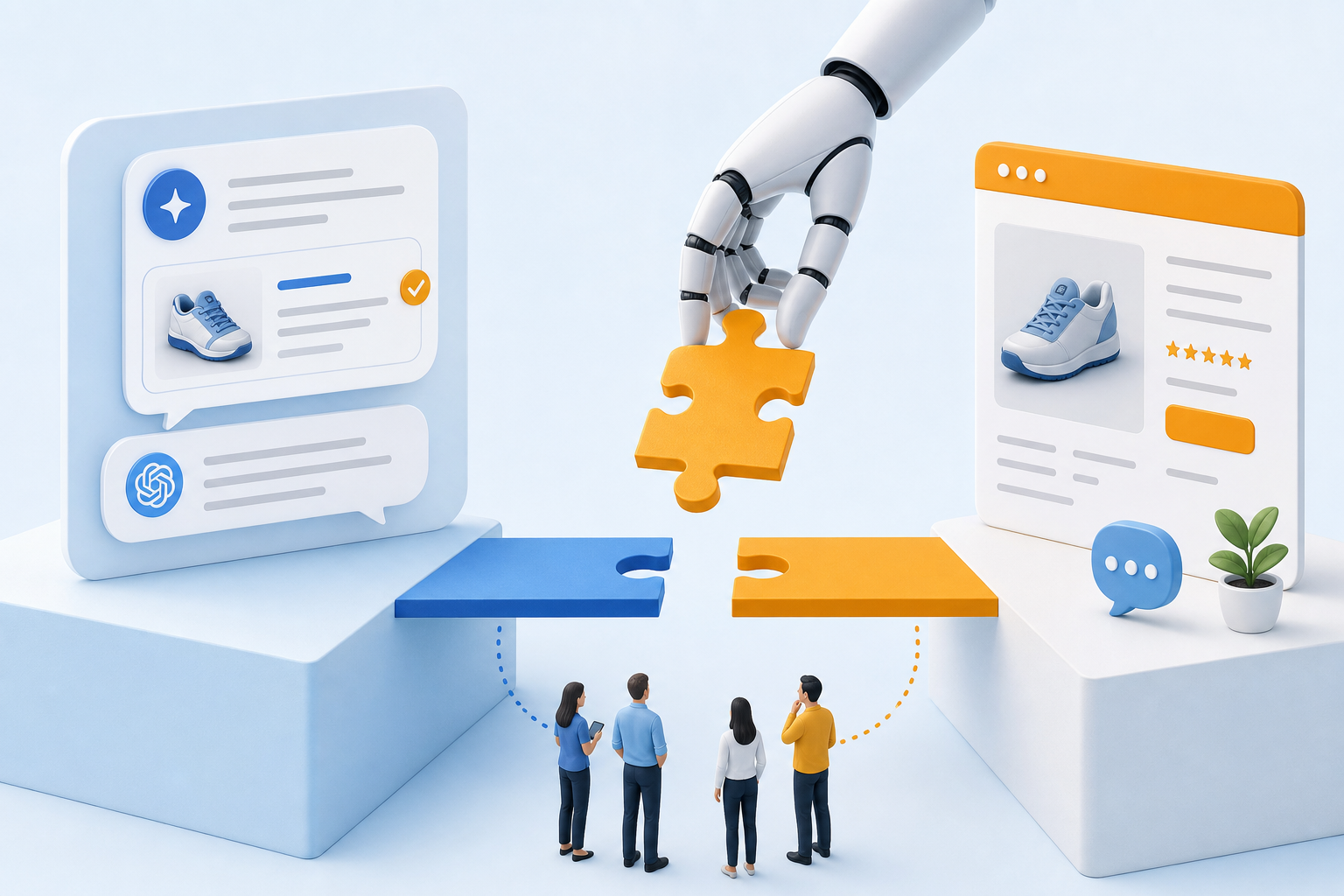
Generative engine optimization has matured into a real discipline with real results. Brands are earning citations inside ChatGPT, Perplexity, Gemini, and Copilot responses. Structured data is cleaner. Entity clarity is sharper. Content is written to be quoted, not just ranked.
That work matters. But a gap is opening up between earning the citation and converting the visitor it sends, and it is worth being honest about where that gap lives.
GEO Is Working. The Numbers Back It Up.
The shift in how people discover products is no longer a prediction. According to Similarweb's 2026 Generative AI Brand Visibility Index, 35% of US consumers now use AI tools at the product discovery stage, compared to 13.6% using traditional search. That is a structural change in where buying intent forms.
At the same time, generative answers are compressing traditional search click-through. Pew Research Center data, reported via Search Engine Land, shows that when an AI Overview is present, traditional result clicks drop from 15% to 8%. Organic search traffic is not disappearing, but the path from query to brand is increasingly mediated by an AI assistant, not a blue link.
The marketing community has responded sensibly. GEO practitioners focus on the signals that make a brand citable: structured data, authoritative content, clear entity relationships, and answers specific enough for an AI to quote. Research from Princeton on GEO methods found that applying these techniques can lift citation rates by 30 to 40%. That is a meaningful edge, and the discipline deserves credit for producing it.
So if GEO is working, what is the problem?
A Citation Is Not a Sale
When an AI assistant recommends your brand and a shopper clicks through, they arrive at a static page built for a different kind of visitor.
That visitor came from a search engine. They were in browse mode. They expected to scan a page, follow links, maybe use a filter. Your product page was designed for exactly that behavior.
The AI-referred visitor is different. They just had a conversation. They asked a specific question, got a specific answer, and followed a recommendation. When they land on your site, they have follow-up questions. "Does this come in a wide fit?" "What is the return window if it does not fit my space?" "How does this compare to the other one you mentioned?"
Your static page cannot answer those questions. There is no conversation to continue. The context the AI assistant built across several exchanges disappears the moment the shopper hits your domain.
This is the last-mile problem in GEO. You earned the citation. You got the click. Then the experience broke.
What Breaks at the Last Mile
The failure is not dramatic. The shopper does not see an error page. They just find a product description that does not address what they actually want to know. So they return to the AI assistant, ask a follow-up, and the assistant may send them to a competitor with better structured data on that specific attribute.
Or the shopper bounces and the session is lost entirely.
Either way, months of GEO work produced a citation that did not produce a conversion. The investment in visibility paid off. The investment in the landing experience did not exist.
The Gap Between Visibility and Conversion
GEO tools and AI-visibility trackers do an excellent job of measuring whether your brand appears in AI-generated responses. That is genuinely useful data. Knowing you are cited is the first step.
But the conversion problem sits downstream from visibility. It lives in what happens after the click, not before it.
A few things tend to be true about AI-referred sessions that make static pages a poor fit.
Visitors arrive with conversational context. They have already described their situation to an AI assistant. They expect the destination to understand that context, or at least be able to engage with it.
Their questions are specific. Not "tell me about running shoes" but "I have plantar fasciitis and need something with a wide toe box under $150." A product page built around general features will not satisfy that query.
They are further along in intent. Adobe Analytics has tracked AI-referred ecommerce sessions and found they convert at meaningfully higher rates than sessions from traditional search. These are not casual browsers. They are close to buying, and they need the right answer to close.
Serving that visitor well requires a surface that can hold a conversation, not just display information.
What the Last Mile Actually Needs
The practical answer is a landing experience that can do what the AI assistant was doing: understand a question, pull the right product information, and guide the shopper toward a decision.
That is not a chatbot bolted onto a product page. A generic engagement layer that cannot access your actual catalog, inventory state, and return policies will frustrate a shopper who just had a high-quality conversation with ChatGPT.
It is also not a full site rebuild. Most brands cannot replatform every time a new traffic pattern emerges.
The architecture that fits this problem is a parallel surface, purpose-built for AI-referred visitors, that sits on your own subdomain and can actually answer the questions your static pages cannot. That is what Aigency builds. It crawls your existing site using vision-based agents, requires no code integration, and creates a conversational experience that serves AI-referred human shoppers, autonomous agents transacting on someone's behalf, and crawlers scanning your catalog before any human arrives.
It is not a replacement for GEO. It is what you put at the end of the pipeline GEO built.
GEO and Last-Mile Conversion Are Complementary
The brands that will do best in AI-mediated commerce are the ones that treat visibility and conversion as two separate problems that both need solving.
GEO earns the mention inside the AI response. The agentic landing experience converts the visitor that mention sends. Skipping either step leaves money on the table.
If you have invested in GEO and you are seeing AI-referred traffic grow, the next honest question is: what happens to those visitors when they arrive? If the answer is "a static product page," you have a last-mile gap worth closing.
You can start by seeing which of your pages are receiving AI-referred traffic and which questions they are failing to answer. Run a free site scan at aigency.ai to see where your current site stands.
FAQs
What is generative engine optimization (GEO)? GEO is the practice of optimizing content and structured data so that AI assistants like ChatGPT, Perplexity, Gemini, and Copilot cite your brand in their responses. It involves entity clarity, citation-worthy content, and structured markup that makes information easy for AI models to quote accurately.
Why is getting cited by an AI assistant not enough to drive sales? A citation brings a visitor to your site, but your static pages were built for search-engine visitors in browse mode. AI-referred shoppers arrive with specific, conversational follow-up questions that a standard product page cannot answer. Without a surface that continues the conversation, the session often ends without a conversion.
What is the last-mile problem in GEO? The last-mile problem refers to the gap between earning an AI citation and actually converting the visitor it sends. The citation delivers the click, but the landing experience fails to engage the visitor's specific intent, so the value of the citation is lost at the point of arrival.
How is an agentic landing page different from a chatbot? A generic chatbot engagement layer typically cannot access your live catalog, inventory, or policy details. An agentic landing page is purpose-built to answer the specific questions AI-referred shoppers ask, using your actual product data, and to guide them toward a purchase decision rather than just fielding generic queries.
Does investing in GEO and investing in last-mile conversion conflict with each other? No. They address different parts of the same funnel. GEO improves the probability that an AI assistant mentions your brand. A strong agentic landing experience converts the traffic that mention produces. Both are necessary; neither replaces the other.
How do I know if my site has a last-mile problem? Look at your AI-referred sessions in analytics. If you are seeing traffic from ChatGPT, Perplexity, or similar sources with high bounce rates or low conversion relative to other channels, your landing pages are likely failing to continue the conversation those visitors expected. A site scan can surface the specific questions being asked that your pages are not answering.
What kind of brands benefit most from solving the last-mile problem? Any brand that has already invested in GEO and is seeing AI-referred traffic grow. The higher your AI-referred session volume, the larger the revenue impact of a poor landing experience. Brands selling products with meaningful decision complexity, such as fit, compatibility, or configuration, tend to see the sharpest gap between AI-referred intent and what a static page can deliver.