Perspective · · 5 min read
Muse Connectors and the Download Numbers That Prove It: Why Every Store Needs to Be Agent-Accessible Now
By Itamar Weisbrod
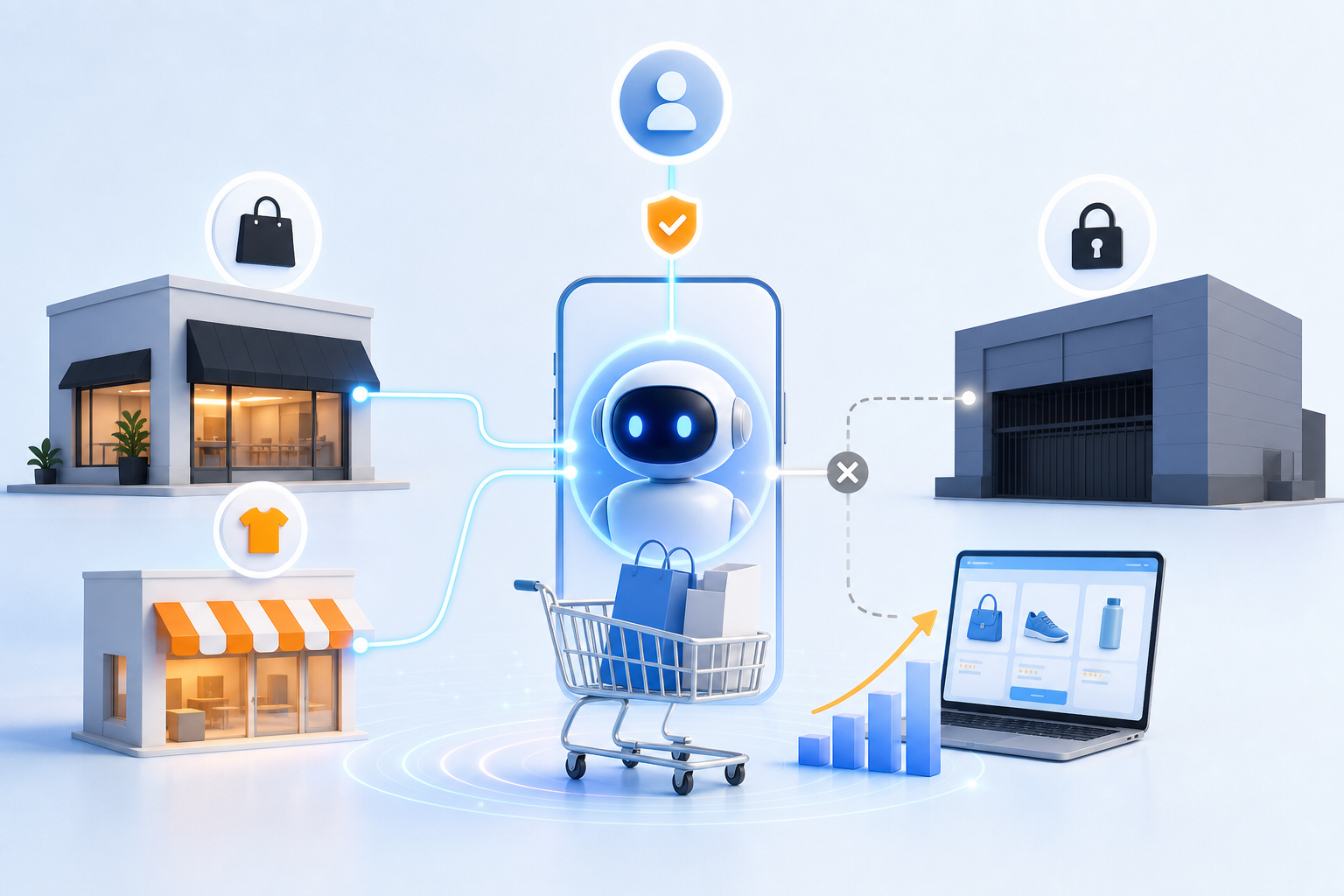
Meta's Muse hit 1.43 million downloads in its first 12 days, surpassing ChatGPT's early adoption pace of 1.37 million downloads over a comparable window, according to JPMorgan and Sensor Tower data reported via Gate US. On September 18, 2026, it took the number one free app spot on the US App Store. Appfigures reported 2.5 million downloads in under two weeks. Wells Fargo raised its Meta price target to $796, and Meta stock rallied between 11 and 30 percent in the days that followed.
The technology is interesting. The speed is the signal.
What Connectors Actually Are
Muse is not a chatbot. It is a consumer shopping agent that acts on a user's behalf across the web. The mechanism that makes it structurally significant is connectors: user-permissioned integrations that let Muse access third-party services and websites directly.
Think of connectors less like API keys and more like the original app store model. The app store did not matter because of what Apple built. It mattered because of what third parties chose to put on it, and how fast users adopted those third parties. Connectors work the same way. Their value scales with which outside services grant Muse access, and which ones do not.
That reframe changes the question for every ecommerce operator. Not "will AI shopping agents go mainstream?" The download numbers settled that. The question is whether Muse can access your store when a user asks it to shop there.
The Shopify and Amazon Divergence
On the same day Muse launched, Shopify added Meta as an AI channel, sharing merchant catalogs with Muse by default. That was not incidental. It made every Shopify merchant agent-accessible from day one, without any action required on their part.
Amazon blocked Muse from its site.
Both decisions are defensible. Amazon has its own consumer agent infrastructure and a clear interest in keeping shoppers inside its ecosystem. Shopify, as a platform that wins when its merchants win, had the opposite incentive.
The divergence matters because it is the first large-scale, public illustration of what it looks like when a retailer chooses to be locked out versus accessible. Amazon is not a cautionary tale: it has the scale and infrastructure to run that bet. Most ecommerce operators do not.
If Muse cannot access your product data, it will not recommend your products. The agent does not struggle with it. It moves on.
Why Speed Changes the Calculus
Prior inflection points in ecommerce, including mobile commerce, social shopping, and voice search, gave operators a comfortable window to observe, evaluate, and then act. The adoption curves were slow enough that waiting 12 months cost relatively little.
Muse's first 12 days do not suggest that window exists here. Surpassing ChatGPT's early pace is not a minor benchmark. ChatGPT's rollout was itself described at the time as the fastest consumer technology adoption on record. Muse cleared it.
The practical implication is not panic. It is that the "wait and see" posture carries a different cost than it did in prior cycles. Connectors established early, by services already agent-accessible, become the default integrations users rely on. Connectors added later have to earn their way into a workflow that already exists.
First-mover advantage in connector ecosystems is real. It is the same dynamic that made being an early app in a category worth more than being a better app that arrived two years later.
This Is Not a Visibility Problem. It Is an Access and Control Problem.
Getting cited by an AI assistant is a visibility problem. That layer matters.
Connectors are a different layer entirely. When Muse attempts to transact on a user's behalf, it is not reading your blog post. It is attempting to access your product catalog, your inventory state, your checkout flow. Whether that succeeds depends on whether your site structure, your data feeds, and your access policies are set up to allow it.
Three things need to be in place.
Your product data needs to be machine-readable in a form agents can parse: not just a sitemap, not just schema markup, but structured data that answers the questions agents are trained to ask, including availability, variants, return policy, compatibility, and pricing by condition.
Your site needs to be accessible to the crawlers and agents that precede a transaction. Vision-crawler-hostile pages, catalog content behind a login wall, incomplete structured data: any of these prevent the agent from building an accurate model of your inventory before the user even asks a question.
You need observability. What are agents asking about your store? Which questions are your current pages failing to answer? What policy do you want to set around what agents can and cannot do on your site? That is not a chatbot widget. It is a control plane for agentic traffic.
This is what Aigency is built to provide: an agentic storefront on your own subdomain that serves AI-referred human shoppers, autonomous agents acting on a user's behalf, and the crawlers that scan your site before any transaction begins. No code integration required. The platform surfaces the specific questions your current pages are failing and gives you the policy layer to manage what agents can do once they arrive.
The Practical Priority Right Now
The practical priority is not building a Muse integration from scratch. It is making sure your store is not the one that gets skipped because the agent could not read it.
Run the free Link Visibility scan at aigency.ai to see exactly where your current site structure fails agent access, before the connector ecosystem locks in around the stores that were ready first.
FAQs
What are Meta Muse connectors? Connectors are user-permissioned integrations that allow Muse to access third-party services and websites on a user's behalf. They function similarly to the original app store model: their value depends on which outside services grant access and how quickly users adopt those integrations.
How fast did Meta Muse reach mainstream adoption? According to JPMorgan and Sensor Tower data reported via Gate US, Muse hit 1.43 million downloads in its first 12 days, surpassing ChatGPT's early adoption pace of 1.37 million downloads over a comparable period. Appfigures reported 2.5 million total downloads in under two weeks.
Why did Shopify add Meta as an AI channel on launch day? Shopify added Meta as an AI channel on the same day Muse launched, sharing merchant catalogs with Muse by default. As a platform whose success depends on its merchants' success, Shopify had a direct incentive to make its merchants agent-accessible from the start.
What happened when Amazon blocked Muse? Amazon blocked Muse from accessing its site, keeping shoppers inside its own ecosystem. The result is a clear illustration of the access divide: retailers that are agent-accessible get recommended, and those that are not get skipped.
What does "agent-accessible" actually require for an ecommerce store? Machine-readable product data that answers the questions agents ask, a site structure accessible to crawlers and agents before a transaction begins, and an observability layer that shows you what agents are asking and lets you set policy around what they can do on your site.
Is this the same as GEO or AI visibility optimization? No. GEO addresses whether AI assistants cite your content. Connectors are a transactional layer. When a consumer agent attempts to shop on a user's behalf, it needs to access your catalog, inventory, and checkout, not read your blog posts. Both layers matter, but they solve different problems.
What should an ecommerce operator do first? Audit your current site for agent accessibility: check whether your product data is structured in a form agents can parse, whether your pages are accessible to vision crawlers, and whether you have any visibility into what agents are asking about your store. The free Link Visibility scan at aigency.ai is a direct starting point.
https://aigency.ai/blog/meta-muse-connectors-agent-accessible-stores-2026