Playbook · · 6 min read
Black Friday 2026 and AI Shopping Agents: What to Fix in the Week Before Meta Muse and Other Consumer Agents Hit Your Site
By Itamar Weisbrod
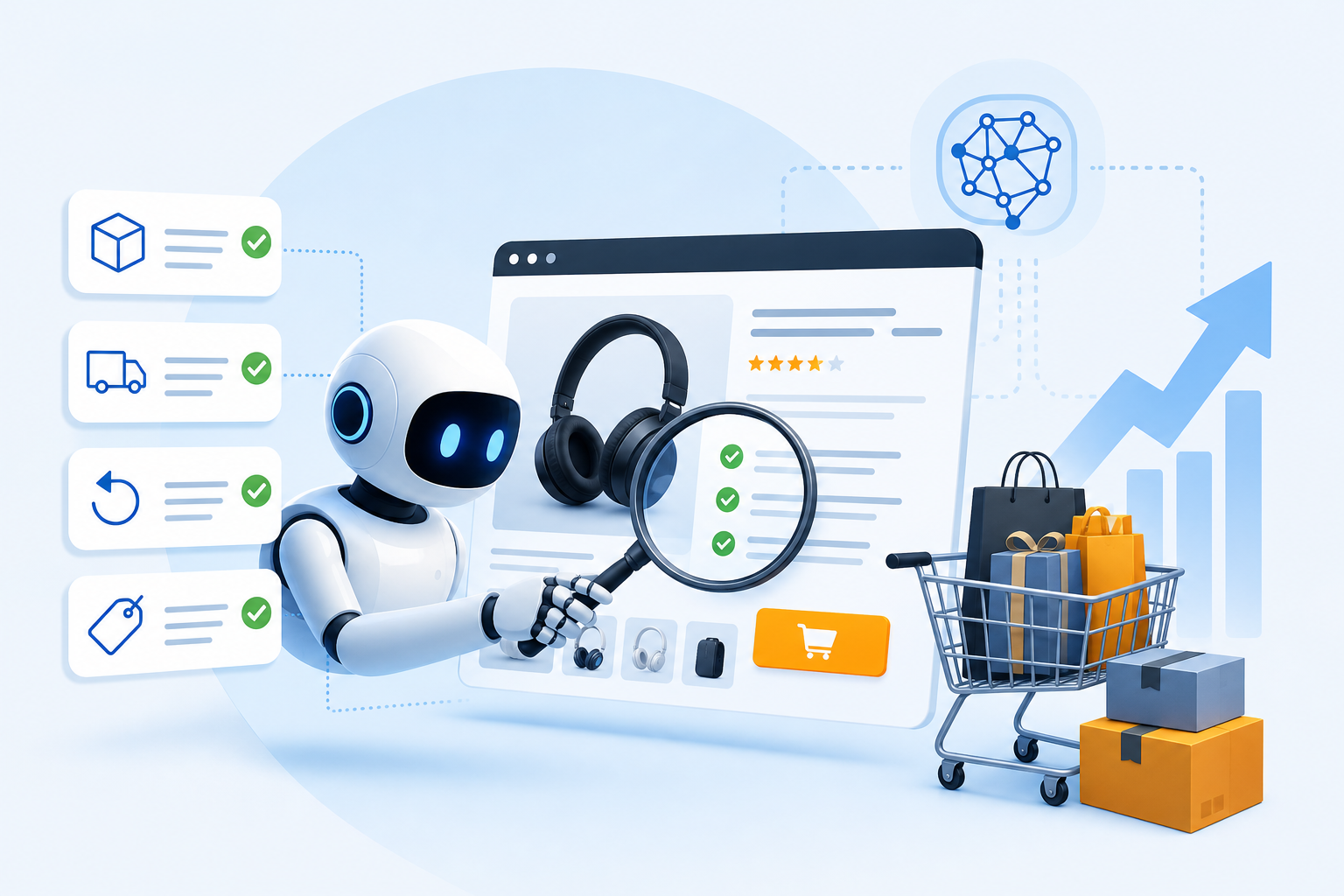
Black Friday is November 27, and a second kind of visitor is arriving alongside your human shoppers. Black Friday AI shopping agents will research, compare, and shortlist your products before a person ever lands on your store. Some of that traffic will look normal. Some will not register in your analytics as people at all.
Here is what that changes, and what to fix in the seven days you have left.
What Is Different About This Black Friday
Adobe's September 28, 2026 holiday forecast projects $275.1 billion in US online holiday spend, up 6.7%. Black Friday is forecast at $12.9 billion. Cyber Monday is forecast at $15.1 billion.
The same Adobe forecast puts AI-referred traffic to US retail sites up 130% year over year. Fello AI reported on November 11, 2026 that Adobe's day-level breakdown shows Thanksgiving up 159%, Black Friday up 95%, and Cyber Monday up 88%.
Salesforce adds scale on the order side. Its November 12, 2026 projections expect AI to drive $75.8 billion in Cyber Week spending and influence more than 1 in 5 holiday orders.
Now the caveat. Retail Brew reported on November 13, 2026 that agent shopping is not yet a major channel. Salesforce found most shoppers use agents for research but are not ready to let AI click Buy Now. Talkdesk's 2026 AI Holiday Shopping Survey found just 15% of US consumers would let an AI agent purchase with their payment information.
This is not an autonomous checkout problem. It is a research-stage problem. The agent shortlists. The human still presses buy.
That shapes what you fix. You are not preparing for a bot to buy your product. You are preparing for an assistant to decide whether your product makes the shortlist, and for the shopper it sends you to land on a page that can finish the job.
What an Agent Does on a Product Page That a Human Does Not
A human skims. An agent reads everything and asks pointed questions.
Here is what actually happens when someone asks ChatGPT, Gemini, or Perplexity for a recommendation. The assistant builds a query, pulls candidate products, then checks each one against the user's constraints. It looks for:
- Specs: dimensions, materials, compatibility, sizing
- Availability: in stock, in the buyer's region, in the buyer's size
- Shipping cutoffs: will it arrive before the date the buyer named
- Returns: window, cost, condition requirements
- Price: current, and consistent everywhere it appears
Forbes cited Profound research on November 17, 2026 showing that 60% of AI shopping queries start without a specific brand name. The shopper did not ask for you. The assistant picks from what it can read and verify.
If a spec is buried in an image, the agent skips it. If your return policy sits behind a modal, the agent cannot confirm it. The agent does not struggle with it. It moves on.
Meta's Muse shows the pattern at scale. Forbes reported on October 26, 2026 that Zuckerberg said on the Q3 earnings call that Muse passed 10 million users in six weeks, with shopping the most common use. GeekWire reported on November 17, 2026 that Muse's shopping instructions now tell it to leave out Amazon unless asked, because Amazon blocked it.
That is what an access decision costs. A retailer that blocked an agent got omitted by default.
Seven Days Before Black Friday: The Checklist
You do not need a rebuild. You need these done, in roughly this order.
1. Fix structured product data and price accuracy. Check that your product schema on Shopify, BigCommerce, Salesforce Commerce Cloud, or Magento carries current price, availability, and variant data. Stale schema is the most common reason an agent quotes the wrong number.
2. State shipping and returns in plain text. Put holiday shipping cutoffs and the return window on the product page as readable text. Not in an image. Not in a tab that loads on click. Agents get asked about delivery dates constantly in November.
3. Answer the buyer's real questions on the page. Pull your last 90 days of support tickets and pre-sale chat logs. The questions people ask before buying are the questions an agent will ask on their behalf. If the answer is not on the page, the agent cannot relay it.
4. Make a deliberate access decision. BCG's October 21, 2026 findings: 42% of retailers make data discoverable by any agent, 32% only by chosen agents, and 6% block agents. Pick your position on purpose. Check your robots.txt and bot-management rules for blanket blocks you never meant to set. If a security rule is shutting out agents you want, fix it before the weekend, not during it.
5. Make promo pricing consistent everywhere. Your product feed, your page, your schema, and your promo banner should show the same price. An agent that finds two prices for one product has a reason to drop it from the shortlist.
6. Test it yourself. Ask ChatGPT, Gemini, Perplexity, Claude, and Copilot about your own products. Ask for a gift under a set price in your category. Ask whether your item ships before December 24. Note what each assistant gets wrong, then trace each error to a page or feed field.
7. Give the arriving human a way to keep the conversation going. A shopper sent by an assistant arrives mid-thought. They already asked a question and got a partial answer. A static page makes them start over. Put something on the landing experience that picks up where the assistant left off: a way to ask a follow-up about fit, delivery, or compatibility without leaving the page.
What to Watch During the Weekend
Do not wait until December to find out what happened. Set this up now so you can read it live.
Segment sessions by referrer. Look for chatgpt.com, perplexity.ai, gemini.google.com, claude.ai, and copilot.microsoft.com in your referral reports. Compare landing pages, bounce rates, and conversion against organic search.
Then look at what those visitors did after landing. If AI-referred sessions hit a product page and leave within seconds, the page did not answer the question the assistant promised it would. That is a content gap you can name and fix.
Check server logs for crawler and agent user agents. Some agent traffic never runs your analytics script, so session-based tools undercount it. Logs show who asked, which pages, and what status code came back. A run of 403s on product pages is a blocked agent.
Keep your expectations honest. The share of orders touched by agents is growing fast, but it starts from a small base. Your data may show a modest number this year. The useful output is not the total. It is the list of pages where AI-referred visitors failed.
Where Aigency Fits
Aigency is the connective layer between AI agents and transactional websites. It works as a merchant control plane with observability, policy, and transaction rails. It serves AI-referred human shoppers, agents acting on a user's behalf, and crawlers that scan your site before anyone arrives. Not agents alone.
Whether you need it this season depends on your traffic. If AI-referred sessions are a rounding error today, the checklist above is enough. If they are growing, you will want to see which questions your current pages fail to answer.
The first step costs nothing. Run the free Link Visibility scan at aigency.ai and see how your site reads to the assistants sending shoppers your way.
FAQs
What are Black Friday AI shopping agents?
They are AI assistants such as ChatGPT, Gemini, Perplexity, Claude, Copilot, and Meta Muse that research, compare, and shortlist products for a shopper. In most cases the human still completes the purchase.
Will agents actually buy things on Black Friday 2026?
Not in large numbers. Talkdesk's 2026 AI Holiday Shopping Survey found just 15% of US consumers would let an AI agent purchase with their payment information. Salesforce reports most shoppers use agents for research, not for clicking Buy Now.
How much AI-referred traffic should I expect?
Adobe's 2026 holiday forecast projects AI-referred traffic to US retail sites up 130% year over year. Your own share depends on your category, your brand awareness, and whether agents can read your pages. Check your referral data for a baseline.
Should I block AI agents from my store?
It depends on your goals. BCG's October 2026 findings show 6% of retailers block agents. Muse's shopping instructions now leave out Amazon unless a user asks, because Amazon blocked it. Blocking costs you visibility in agent-made shortlists. Decide on purpose, then confirm your rules match the decision.
How do I know if AI agents are visiting my site?
Segment referral traffic by assistant domain, and review server logs for agent and crawler user agents. Agents often skip analytics scripts, so logs catch visits that session-based reports miss.
What is the single most useful fix this week?
Put shipping cutoffs, returns, and key specs in plain on-page text, and make sure price and availability match across your feed, page, and schema. Those are the facts agents verify first.
Conclusion
Seven days is enough to fix the basics. Get your data accurate, your policies readable, your access rules deliberate, and your answers on the page.
Then watch the weekend closely. The totals will tell you little. The pages where AI-referred visitors bounced will tell you exactly what to build next. Start with the free Link Visibility scan at aigency.ai.
https://aigency.ai/blog/black-friday-2026-ai-shopping-agents